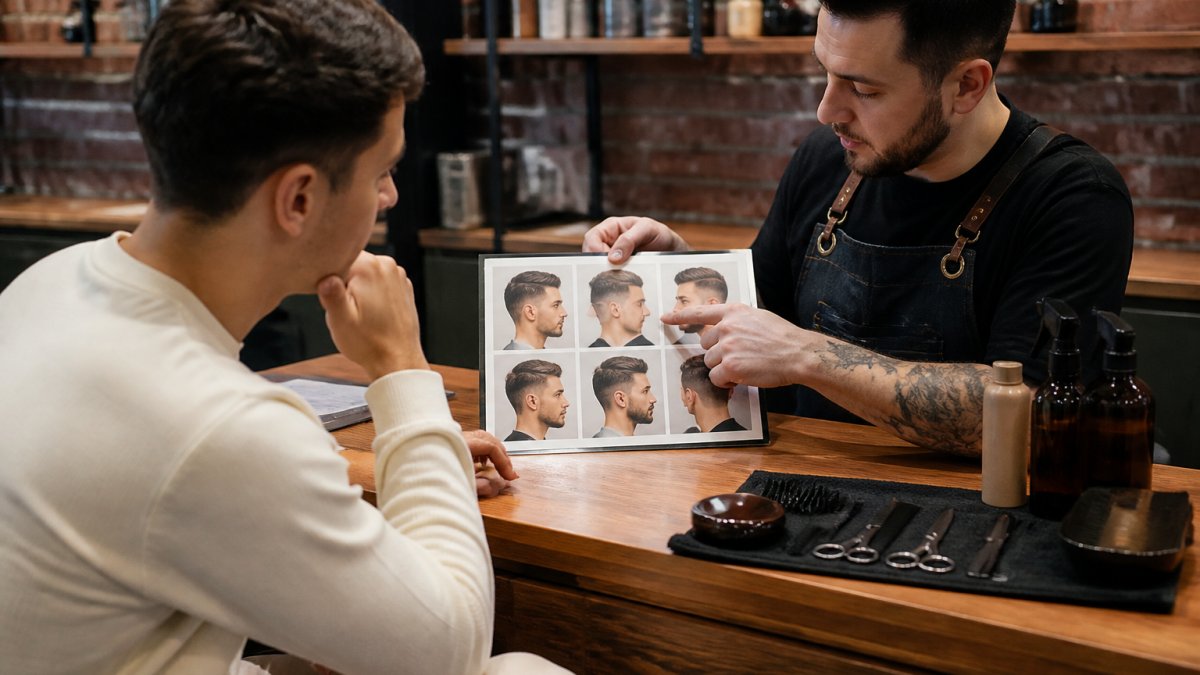
 how-to
Choosing a Barber for Modern Styles: A 2026 Guide
Table of Contents
- Step 1: Decide What Modern Styles Barber You Actually Need
- Step 2: Read a Barber Portfolio Like a Pro
- Step 3: What to Tell Your Barber at the Consultation
- Step 4: Getting a Haircut for Face Shape and Hair Type
- Step 5: Verify Hygiene and Professional Standards Before You Sit Down
- Step 6: Plan How Often to Get a Haircut for Modern Styles
- Step 7: What to Do When the First Cut Misses the Mark
- Conclusion: Finding Your Modern Styles Barber
- Frequently Asked Questions
Last Updated: October 12, 2026
Step 1: Decide What Modern Styles Barber You Actually Need
Choosing a barber for modern styles starts with knowing which type of pro you need. A barber focuses on clipper work, fades, tapers, and beard trims. A hairstylist handles scissor cuts, color, and longer shapes.
At Snips & Sips @ Studio 18, we see this mix-up often. Most modern cuts need both skill sets.
Barber or Hairstylist: Which One Handles Modern Cuts?
Barbers train in clipper and scissor technique on shorter hair. Hairstylists train in cutting, styling, and chemical work on all lengths. A modern fade with a textured top sits in the middle.
- Fades, tapers, beard work → barber
- Scissor cuts, longer layers → hairstylist
- Textured crops, modern pompadours → either, if trained well
- Color or highlights → hairstylist
Ask one question before you book: "Do you cut both clipper and scissor styles?" The answer tells you plenty.
Match the Cut to Your Hair Texture and Growth Patterns
Hair texture decides which cuts look sharp and which ones fight you. Straight hair shows clean lines. Curly hair hides them.
- Straight, fine hair: tight fades and tapers look crisp
- Thick, wavy hair: textured crops and layered tops work best
- Coily hair: scissor work with clipper edging holds shape
- Receding hairline: shorter sides, fuller top
Watch your growth pattern too. A cowlick at the crown will push against a flat cut. Tell your barber where it sits.
Step 2: Read a Barber Portfolio Like a Pro
A barber portfolio is the fastest way to judge real skill. Skip the shop photos of clean floors. Look at finished cuts on real heads.
Modern styles live or die on detail. A good portfolio shows fades with no hard lines. It shows texture that moves.
The trick most readers miss: a portfolio is not a gallery, it is evidence.
Portfolio Checklist for Modern Cuts
Use this list when you scroll a shop's page or feed:
- Fades blend smooth from skin to length. Zoom in on the transition line. A clean fade has no visible band where the guard changed. If you can see a stripe, the blend was rushed.
- Tapers have clean, even edges. The sideburn and nape should taper at the same rate on both sides. Asymmetry in the photo usually means asymmetry in the cut.
- Scissor cuts show soft, natural movement. Look for strands that fall at slightly different lengths. A blunt, uniform edge on a "textured" cut means the barber skipped point-cutting.
- Beard trims follow the jawline. The cheek line and neckline should look intentional, not buzzed flat.
How to Judge Consistency, Not Just One Good Cut
One great photo proves nothing. Scroll for patterns:
- Count the clients. Ten different heads with clean fades is stronger evidence than one styled model shot.
- Check the dates. A barber posting three cuts a week is actively working the technique you want.
- Look for repeat clients. If the same face appears months apart with a consistent cut, that barber can reproduce a result, not just nail it once.
- Compare left and right sides. In any photo showing both, the fade height and taper should match.
Red Flags in a Portfolio
- Heavy filters or black-and-white edits that hide blend lines
- Only one angle per cut
- Only one hair type across dozens of posts
- Before-and-after shots where the "after" is clearly styled to hide the fade
If a portfolio only shows one style, that barber likely does one style well. That's fine, if it matches what you want. If it shows range and consistency, you have found someone who can adapt to your hair instead of forcing your hair into their one look.
Step 3: What to Tell Your Barber at the Consultation
The consultation decides the cut. Come ready to describe what you want in plain words. "Short on the sides, longer on top" is a start, not a full brief.
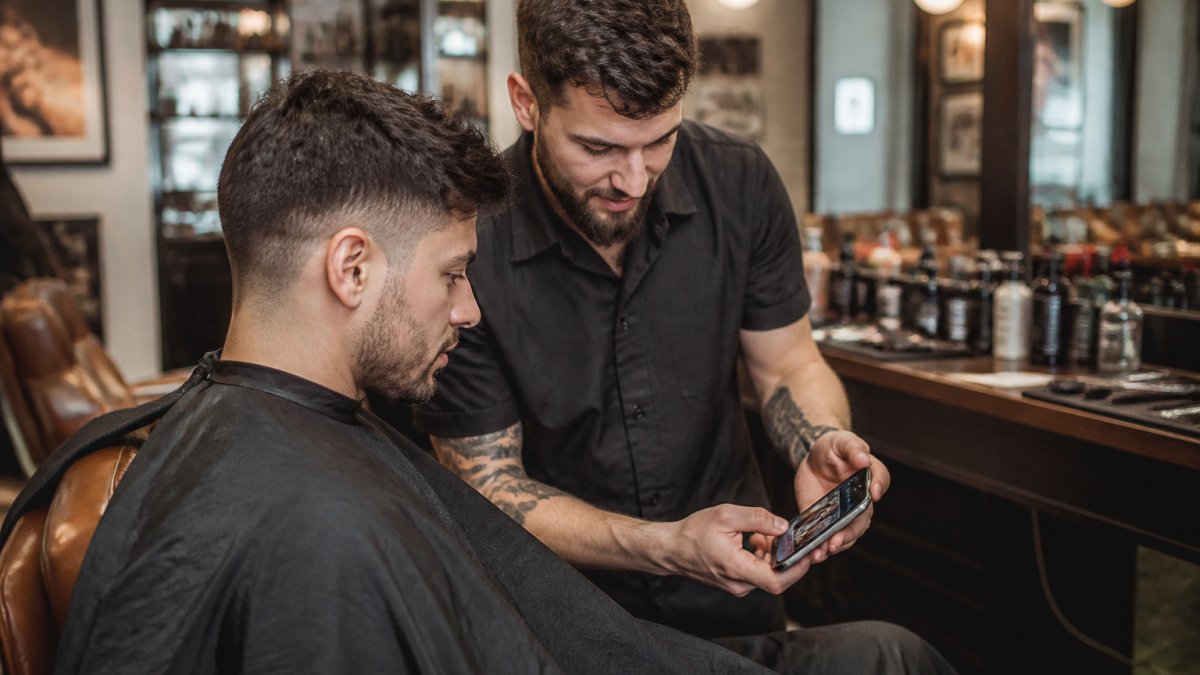
Most vague cuts trace back to a vague brief. The fix is to speak in the same units your barber works in. Here is the vocabulary that actually moves a consultation forward:
- Guard length: clipper guards are numbered, and the number is the length in eighths of an inch. A #1 guard leaves 1/8 inch, a #2 leaves 1/4 inch, a #3 leaves 3/8 inch, a #4 leaves 1/2 inch. Saying "a two on the sides" is faster and more accurate than "short."
- Fade height: where the blend starts. A low fade begins just above the ear, a mid fade sits around the temple, and a high fade starts near the crown. Skin fades go all the way down to bare skin; a bald fade is the same thing under a different name.
- Neckline: squared or rounded. A squared neckline reads sharper and grows out faster; a rounded neckline follows the natural hairline and lasts longer between visits.
- Top length: give it in inches or in reference to a landmark. "Two inches on top, enough to push back" is clearer than "medium."
- Texture: choppy, smooth, or natural. If you want movement, say you want point-cutting or texturizing shears used, not just a blunt cut.
A Consultation Script You Can Reuse
You do not need to memorize jargon. Read this out loud at the chair and adjust the numbers:
"I want a mid fade starting around the temple, a #1 guard at the bottom blending up to a #3, about two inches left on top with some texture so it moves. Square the neckline. I usually use matte clay and I want it to look good for about three weeks."
That single sentence covers guard length, fade height, top length, texture, neckline, product, and maintenance window. A barber who hears it can either confirm it or tell you why your hair will not cooperate, which is the conversation you actually want.
Questions to Ask Before the First Snip
- "Does my hairline or crown change how this fade should sit?"
- "How will this look at week three, not day one?"
- "Do you point-cut the top or use clipper-over-comb?"
- "What product do you recommend for this finish?"
A common mistake is staying vague to be polite. Vague briefs get vague cuts. Say what you want, and ask what your hair can actually do.
How to Use Reference Photos Without Copying Someone Else's Hair
Reference photos help, but they can mislead. A photo shows someone else's hair type, density, and face shape. Yours may differ.
Bring two or three photos. Point to the parts you like: the fade height, the top length, the texture. Tell your barber which parts matter most. Then ask, "Can my hair do this?" A good barber will tell you the truth.
Step 4: Getting a Haircut for Face Shape and Hair Type
A haircut for face shape and hair type should balance your features, not hide them. The right cut adds height where you need it and trims bulk where you don't.
- Round face: add height on top, keep sides tight
- Oval face: almost any modern cut works
- Square face: soft texture up top balances a strong jaw
- Long face: avoid too much height, keep some width
Head shape matters as much as face shape. A flat back crown changes how a fade reads. Point out any bumps or flat spots so your barber can work around them.
Step 5: Verify Hygiene and Professional Standards Before You Sit Down
Clean tools and a clean shop protect you. Look for a few basics before you book.
- Fresh towels and a clean cape for each client
- Clippers wiped down between cuts
- Combs and scissors stored clean
- A current license posted where you can see it
- Barbers who wash hands or use sanitizer
State boards set the rules for licensing and sanitation. You can check your state's board site for license status. State barber licensing and sanitation rules
If something looks off, ask. A pro will not mind.
Step 6: Plan How Often to Get a Haircut for Modern Styles
How often to get a haircut depends on the style and how fast your hair grows. Most modern cuts need a visit every three to five weeks.
- Skin fades: every two to three weeks
- Low or mid fades: every three to four weeks
- Scissor cuts: every four to six weeks
- Beard trims: every two to three weeks
Book your next visit before you leave. A busy barber fills up fast, and a standing slot keeps your cut sharp.
Step 7: What to Do When the First Cut Misses the Mark
A missed cut is fixable. Wait a few days, then call the shop. Most barbers will adjust a cut they just gave you.
- Be specific about what feels wrong
- Bring a photo if words fail
- Ask for a small fix, not a full redo
- Give honest feedback at the chair
If the shop won't help, find a new barber. One bad cut is a fluke. A shop that ignores feedback is a pattern.
Conclusion: Finding Your Modern Styles Barber
Finding the right barber takes a little homework, but it pays off every visit. Check the portfolio, speak up at the consultation, and plan your upkeep.
At Snips & Sips @ Studio 18, we blend classic grooming technique with a modern, laidback setting. Our studio gives you professional haircuts in a relaxed space, with a welcoming atmosphere built for busy schedules.
Frequently Asked Questions
How do I choose a barber for a modern haircut?
Start by checking their portfolio on Instagram or the shop's website. Look for fades, tapers, scissor cuts, and textured styles similar to what you want. Read online reviews for consistency and customer service. Book a consultation before committing to a full cut, and ask about their experience with your specific hair type. A barber who specializes in modern styles will show recent work and explain their technique plainly.
What should I look for in a barber portfolio?
Look for photos taken in the last few months, not years-old highlights. Check for variety: fades, tapers, scissor work, beard trims, and modern textured cuts. Pay attention to hairline work and blending, since those details separate skilled barbers from average ones. If every photo shows the same cut on the same hair type, that barber may not handle your texture or style preference well.
Should I bring a photo to my barber?
Yes, bring two or three reference photos showing the style from different angles. Mention what you like about each one, like the fade height or the texture on top. Ask your barber how your hair type, growth pattern, and face shape will change the result. Photos start the conversation, but your barber's feedback on what will actually work for you matters just as much.
How often should I visit a barber to maintain a modern haircut?
Most modern styles need a visit every three to five weeks. Fades and tapers grow out fastest, so plan on the shorter end if you wear those. Scissor cuts and longer textured styles can stretch to six or eight weeks. Ask your barber for a maintenance schedule based on your growth rate and how sharp you need to look for work or events.